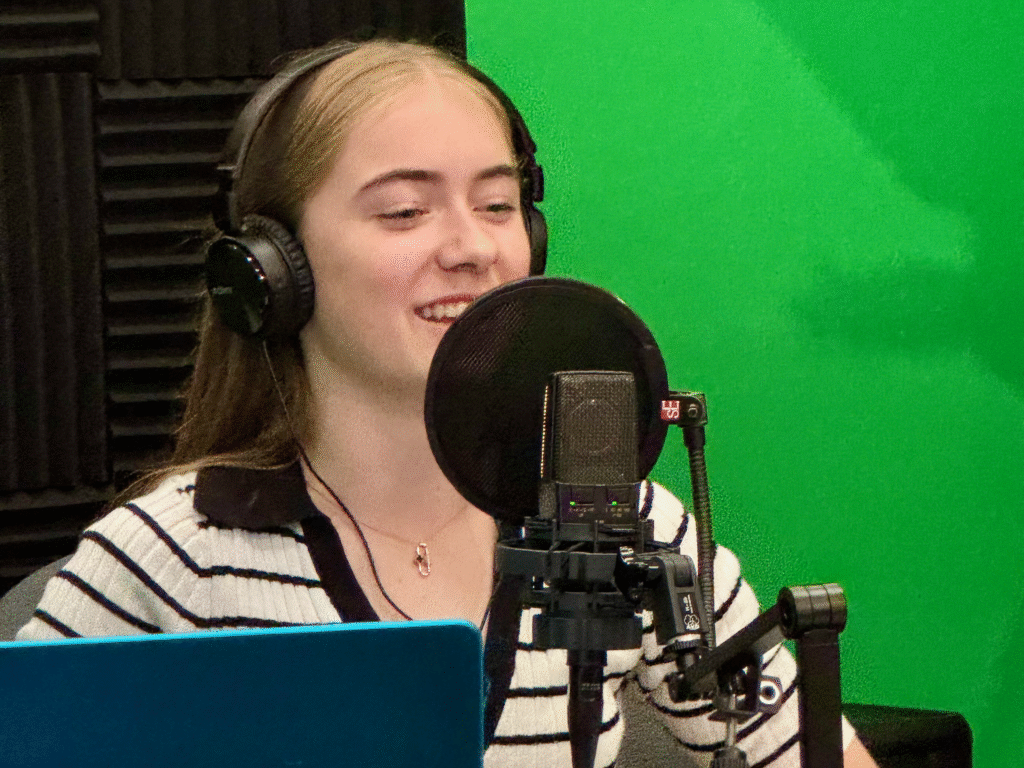
Launching the very first episode of the Teen Exec Podcast was one of the most eye-opening and challenging projects I’ve ever taken on. Looking back, I realize just how many executive functioning (EF) skills it took to bring the episode to life. From planning and organizing to time management and flexibility, I was practicing these skills every step of the way.
Before I dive into the process, I want to highlight the people who made the episode possible:
- Dr. Karen Zaleski, Superintendent of Weston Public Schools, who joined me as my first guest.
- Nathan Suher, Executive Director of Weston Media Center, who produced the episode and guided me through the technical side of podcasting.
- Dr. Stacy Smith, my mom and co-host, who brings both her medical expertise and her experience as a professor to the conversation.
Preproduction: planning and preparation
Preproduction is all about getting organized before the microphones even turn on. This stage challenged my EF skills in several ways:
- Planning and prioritizing. This skill is about deciding what matters most and putting first things first. By outlining the flow of the episode and drafting questions, I practiced choosing the essential points and leaving out distractions. I used Google Docs to organize everything and keep it in one place.
- Using AI for idea generation. I also used an AI tool to brainstorm a list of possible questions. From there, I picked the ones that felt most relevant to students and rewrote them in my own words. This saved time and gave me new angles I might not have thought of on my own.
- Time management. Coordinating schedules between a superintendent, a media director, and my co-host wasn’t easy. Time management meant estimating how long tasks would take, building in buffer time, and adjusting when conflicts came up. Google Calendar was my go-to tool for keeping it all straight.
Production: recording the episode
When it came time to record in the studio at Weston Media Center, my EF skills were tested in real time.
- Focus and attention. Focus means tuning out distractions so you can stay present in the moment. For me, it was about listening closely to Dr. Zaleski’s answers while also keeping track of my own outline in Apple Notes.
- Emotional regulation. This skill is about managing stress and nerves so they don’t take over. I was nervous walking into the studio, but I practiced calming breaths beforehand, which helped me reset and stay steady. Later, when I stumbled over the intro and we had to start again, emotional regulation helped me bounce back quickly.
- Working memory. Working memory is like a mental scratchpad for juggling information. I used it to keep track of the question flow while also remembering points I wanted to circle back to.
Postproduction: reflecting and improving
Once the episode was recorded, the work wasn’t over.
- Self-monitoring. Self-monitoring means stepping back and noticing what you did well and what needs improvement. Listening to the recording gave me a chance to catch habits like using filler words and to reflect on my pacing.
- Adaptability. Adaptability is being willing to adjust when things don’t go perfectly. Not every question landed how I hoped, and instead of being frustrated, I thought about how to handle those moments better next time.
- Goal-setting. Goal-setting is about turning reflection into action. I wrote down specific goals for future episodes, like practicing smoother transitions and tightening up my timing.
I also met with Nathan to go over the software we used to edit and post the episode. We worked with Captivate, which automatically removed filler words like “um” and “like,” generated a full transcript, and even offered a feature where you could swap out words in text and have the audio update to match. (We didn’t use that feature.) It was surprising to see how tools like Captivate can take care of the little details. That gave me more space to practice self-monitoring and focus on the overall quality of the episode instead of getting stuck on small edits.
Teamwork: learning from others
Another big part of this project was working with adults who had very different skills and responsibilities. Nathan handled production, Dr. Zaleski brought the perspective of a superintendent, and my mom added her professional and teaching experience. Teamwork requires communication and collaboration, skills that mean expressing ideas clearly, listening to feedback, and adjusting your approach. Using Google Drive for scripts and outlines kept everyone aligned and on the same page.
Key takeaways from Dr. Zaleski
Beyond the process itself, I walked away inspired by the insights Dr. Zaleski shared during our conversation. Several key points stood out for me:
- Explore widely and follow your passions. Dr. Zaleski began college intending to be a doctor but switched to psychology after realizing that’s what she truly enjoyed. She encouraged teens not to feel locked into one path. If a new subject sparks your interest, pursue it and stay open to unexpected opportunities.
- Choose your peers wisely and build a supportive “team.” Surround yourself with friends and mentors who share your values, push you to grow, and lift you up. If your current group doesn’t, it’s okay to branch out. Adults and peers who see your potential can often guide you toward opportunities you might not recognize on your own.
- Develop time-management habits. To handle her demanding schedule, Dr. Zaleski prioritizes tasks, delegates when possible, and keeps separate lists for long-term goals and daily actions. Teens can adapt this by planning their work and activities, keeping track of deadlines, and asking for help when needed.
Take on challenges
If you’ve ever taken on a big project (like starting a club, performing in a play, or managing a sports season), you’ve probably practiced many of the same EF skills without even realizing it. Challenges like these are opportunities to grow, not just tasks to check off.
Final thought
Recording my first podcast episode wasn’t just about creating content. It was about living out the very skills I talk about in Teen Exec. The process pushed me to plan, organize, focus, reflect, and grow. And it showed me that executive functioning isn’t just something we study. It’s something we practice every time we take on a new challenge.
So here’s my advice: if you’re thinking about trying something new, don’t wait until you feel completely ready. Jump in. The project itself will teach you the skills you need along the way.
I plan to continue recording podcast episodes. If there are topics you’d like to see me address, please contact me through teenexec.com.


