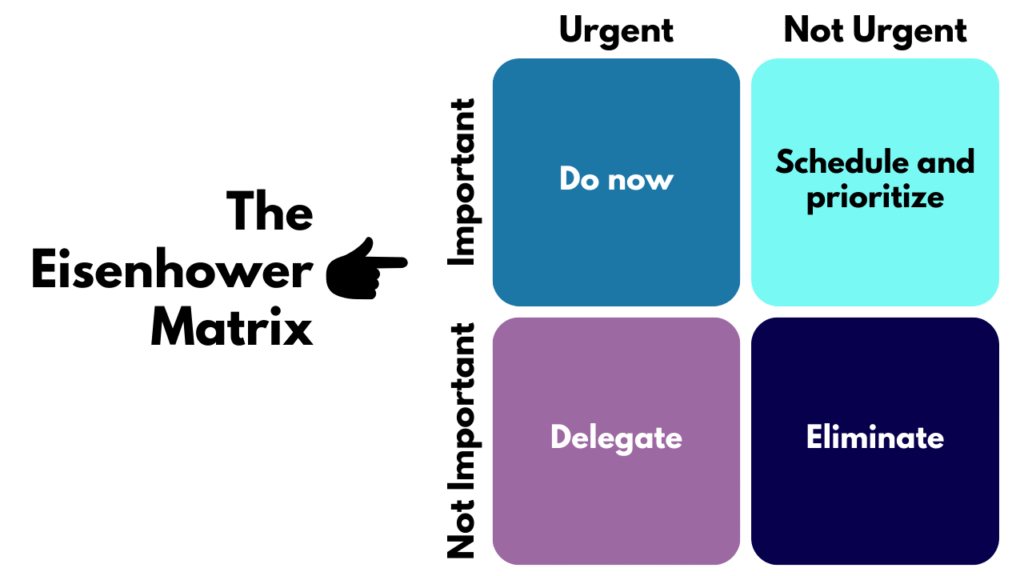
One of the best tools I’ve come across for managing time and stress is something called the Eisenhower Box (also called the Eisenhower Matrix). I first learned about it in a workshop based on the book The 7 Habits of Highly Effective Teens by Sean Covey. Since then, I’ve noticed it also shows up in other leadership and productivity books—which makes sense, because it’s simple but powerful.
The Eisenhower Box sorts tasks into four quadrants:
- Urgent and important (do it now)
- Important but not urgent (plan to do it soon)
- Urgent but not important (delegate or minimize)
- Not urgent and not important (avoid or drop)
When I tried this for the first time, I realized that I was spending way too much of my energy on “urgent but not important” tasks, like replying instantly to every group chat message or saying yes to last-minute requests that didn’t actually matter. Those things felt pressing in the moment but didn’t move me closer to my goals.
Here’s the shift I’ve been working on: focusing more on “important but not urgent” tasks. That’s where long-term growth happens, like prepping early for a presentation, keeping up with fitness, or building stronger relationships. When we don’t give these enough attention, they can suddenly turn into “urgent and important” emergencies (think cramming for a test the night before).
My Eisenhower box in real life
- Urgent + Important: Finishing an essay that’s due tomorrow night. (If I don’t do it, I’ll get a zero.)
- Important + Not Urgent: Practicing choreography for an upcoming dance performance. (The show isn’t for weeks, but steady practice builds confidence.)
- Urgent + Not Important: A friend texting me to join a last-minute online game when I already planned to study. (Feels urgent but doesn’t align with my priorities.)
- Not Urgent + Not Important: Scrolling TikTok for 30 minutes before bed. (Doesn’t help me reach any goals, just eats up time.)
How to use it yourself
If you want to improve your own use of time, here’s my advice:
- Make your own Eisenhower Box for a day or week. Write down everything you need to do and sort it into the four quadrants.
- Use guiding questions to decide where each task belongs:
- If I don’t do this today, will it create a crisis? (Urgent + Important)
- Does this help me reach my long-term goals, even if it’s not due soon? (Important + Not Urgent)
- Is this mostly about someone else’s timeline, not my priorities? (Urgent + Not Important)
- Would skipping this have little to no real consequence? (Not Urgent + Not Important)
- Commit to spending more time in the “important but not urgent” box. That’s where you’ll prevent stress and make the biggest progress toward your goals.
I’m still practicing this myself, but even small changes have helped me feel more in control of my schedule—and less overwhelmed.
Have you ever used the Eisenhower Box? If you try it out this week, let me know what you discover!
FOR PARENTS >>>
Parents can play a big role in helping teens build these time-management skills. Here are a few ways to support:
- Model the framework. Share how you decide which tasks at work or home are urgent vs. important.
- Ask reflective questions. Instead of telling your teen what to do, ask: Which box would this task go in? or What’s the long-term benefit of doing this now?
- Encourage “important but not urgent” habits. Celebrate when your teen starts an assignment early, schedules time for exercise, or prepares for an event in advance.
- Reduce distractions. Help them minimize the “not urgent, not important” activities (like endless scrolling) by setting healthy boundaries together.
By reinforcing these habits at home, you’ll help your teen build confidence in managing priorities—a skill that will serve them well in high school, college, and beyond.


